
Soft Washing vs. Pressure Washing: Which Does Your Home Need?
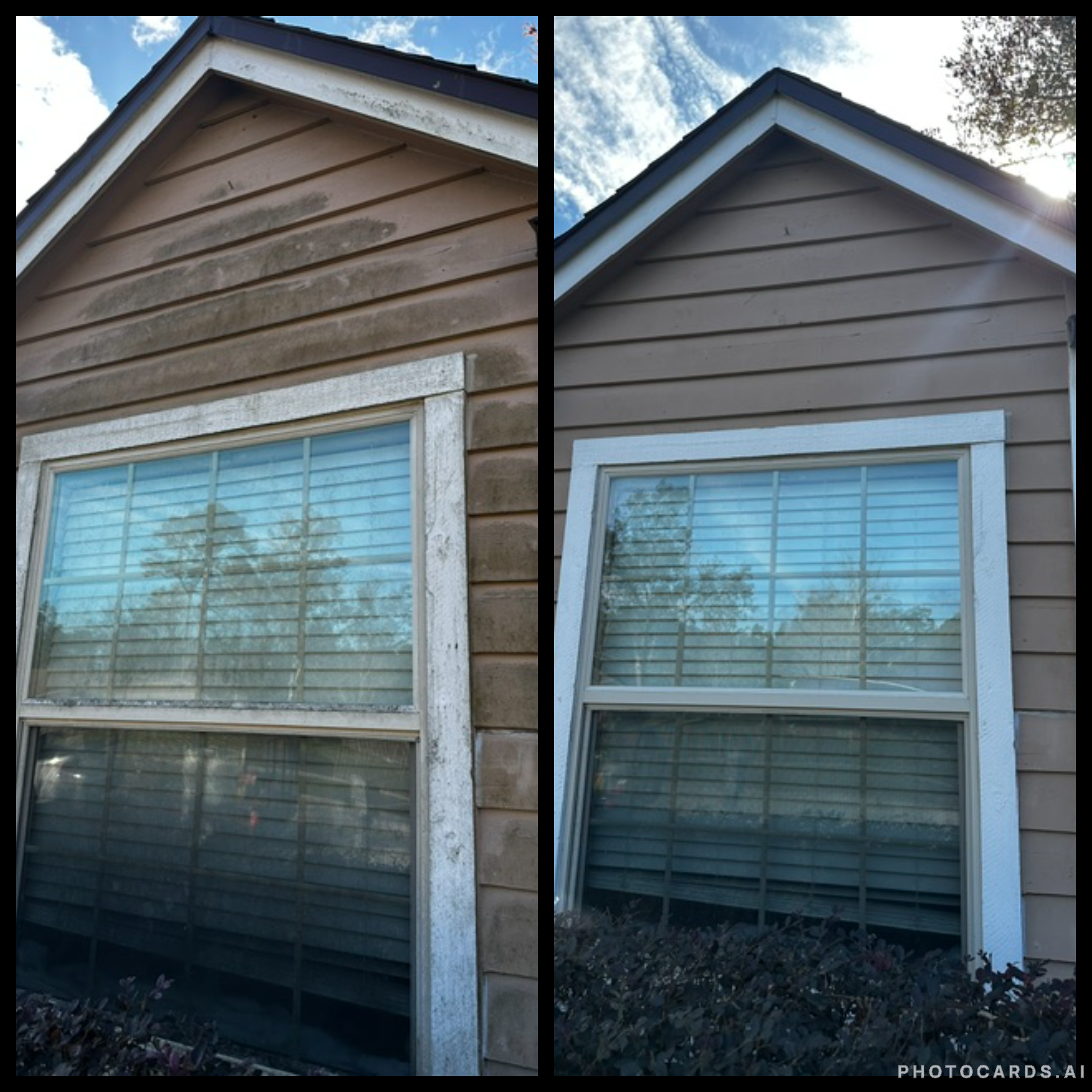
Soft washing and pressure washing often get mixed up, but they're two different cleaning methods. The short answer: most of your home's exterior, like siding, roofs, gutters, screens, and windows, needs a soft wash, while hard surfaces like driveways, patios, and pavers need a pressure wash. Using the wrong method can strip paint, tear screens, or shorten the life of your roof. Here's how to tell the difference.
What's the Difference?
A soft wash is a low-pressure, high-flow, spray-on, rinse-off service. The cleaning solution does the work, not the pressure. It's used on delicate surfaces, and it can also pre-treat hard surfaces before they're pressure washed.
A pressure wash uses high pressure and medium to high flow to blast away dirt, grime, and stains. It's used to deep clean tough, durable surfaces, known as hardscapes.
Which Surfaces Need Which Method?
Soft Wash
Exterior walls, fascia, soffits, gutters, roofs, vinyl siding, screened enclosures, windows, and fences all need a soft wash to get clean both effectively and safely. Low pressure protects delicate materials like paint, screens, window seals, and roof shingles, while the cleaning solution kills mold, mildew, and algae.
Pressure Wash
Concrete driveways and sidewalks, pavers, brick, stone, asphalt, pool decks, outdoor tile, metal fences, and wood decks are all hardscapes that are cleaned with a pressure wash. These surfaces are dense and durable, so they can handle high pressure, and they often need it to lift deep, stubborn dirt. Even so, technique matters. A skilled operator adjusts the pressure and nozzle distance for each surface, especially softer ones like wood, to avoid etching or splintering.
How to Avoid Costly Damage
Know What's Being Cleaned
Before work begins, walk your property with your cleaner and agree on exactly what will and won't be cleaned. It's the simplest way to avoid surprises.
Know What Chemicals Are Being Used
The industry standard is sodium hypochlorite, the same chemical as liquid pool chlorine. Professionals buy it at 10.5% to 15% strength and dilute it with water based on the surface: milder for siding, stronger for roof algae. Many also add surfactants, which help the solution cling to surfaces, and degreasers for oily stains. Think of these as heavy-duty soap.
Sodium hypochlorite can harm plants and grass even when diluted, so a good company will wet your landscaping before cleaning and rinse it again afterward.
Ask These Two Questions
These two simple questions help you gauge a company's knowledge and catch the wrong cleaning method before it happens:
- "Which machine will clean each surface?" A knowledgeable company should be able to tell you right away which parts of your home get a soft wash and which get a pressure wash.
- "What pressure will you use on each surface?" Listen for an answer that changes by surface: low pressure for your siding and roof, higher pressure for your driveway. If the answer is "full power on everything," keep looking.
Not Sure Which Your Home Needs?
Most homes need both: a soft wash for the house and roof, and a pressure wash for the driveway, walkways, and patio. Clean Slate Wash Pros will look at your property, tell you exactly which method each surface needs, and give you a free quote.